Car Engine Warning Lights Explained

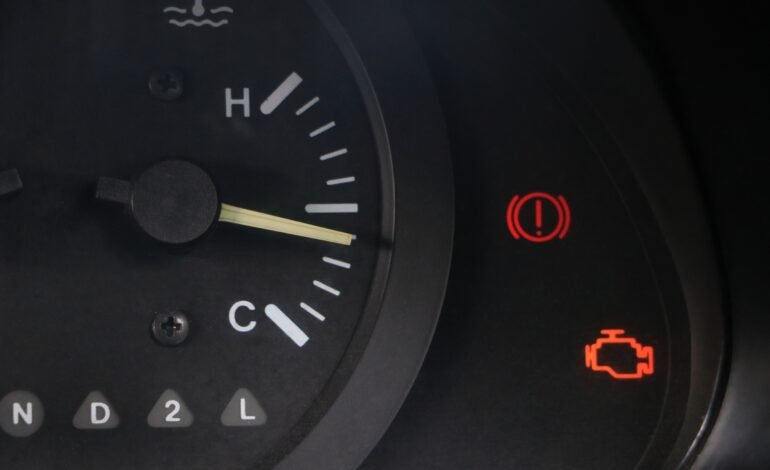
Modern vehicles have various warning lights on the dashboard that help identify potential problems. Understanding the meaning of these lights is highly important for your driving experience and vehicle maintenance.
In spite of their importance, many drivers tend to ignore warnings on their dashboards. In this respect, let us look at the main warning lights in more detail.
Common Warning Lights and Their Meaning
Engine Check is among the most popular warnings; it may be a sign of any problem starting from a relatively minor issue up to severe engine malfunction.
Oil Pressure Warning Light informs that engine oil pressure or level is too low; thus, urgent attention is necessary.
Battery Warning Light suggests that charging system has some malfunction; it may affect your battery or alternator.
Brake Warning Light means that there is an issue with the braking system of the car. It is crucial to pay attention to this warning and fix it without delay.
What You Should Do
Once you see that any warning light has appeared, try not to panic, but it is equally important not to ignore the signal.
Read your car manual and determine the reason for the warning light appearance.
In case the problem is rather serious such as an engine or oil light, then the best option would be to park your vehicle and go to the nearest repair shop.
If the problem seems to be less significant, then try to get there safely.
Why Is It Important?
Understanding warning lights allows identifying and solving the problem in time and avoiding further damages.
Moreover, being able to interpret warning lights properly increases the level of safety because there are several lights that refer to the functioning of the most important systems of your vehicle.
“Dashboard warning lights are your car’s way of telling you something is wrong, never ignore them.”
Conclusion
As you can see, understanding engine warning lights is crucial for every car owner.